
- Home
- Why Clinamen
- Philosophy
- White paper
- The divider effect and SUT gain
- Total damping calibration to maximize tracking performance in MC cartridges
- Thinking beyond 47k: SUT primary loading and its effects on damping
- Clinamen Step-Up Transformer Theory
- IMA Amplifiers and Volume Control: Evolution of Audiophile Thought
- Philosophy of Physical Music Media
- Reviews
- Pricing Policy and Technical Support
- Contact


Philosophy
"Make things as simple as possible, but not simpler."
Albert Einstein
CLINAMEN AUDIO is a project both technical and idealistic, born with a clear purpose: to craft instruments for home music reproduction capable of delivering an emotional engagement as close as possible to the live event.

The Clinamen design framework is built upon the preservation of the signal’s analog integrity—understood as temporal accuracy, micro-dynamics, and phase coherence. High efficiency, reduced power requirements, and the rejection of redundant circuit solutions are not driven by ideological minimalism; rather, they serve to prevent compression, delays, and phase shifts that would otherwise compromise the original structure of the musical event.
This pursuit of continuity and immediacy creates a direct connection between technical reproduction and human perception, delivering a sound that is never artificially enhanced, but restored in its most natural articulation.
Over time, the drive toward miniaturization and cost reduction led to the gradual phase-out of vacuum tubes across almost all technological sectors. While understandable in many applications, this shift is far less justified in high-fidelity audio, where the triode remains the most intrinsically linear active device ever created. Its capacity to operate without invasive corrective networks makes it an exceptional tool for preserving the integrity of the musical signal.

The deployment of inherently linear circuits, combined with an engineering philosophy that avoids unnecessary complexity, unlocks true musical performance. Clinamen electronics are born from an in-depth study of signal amplification phenomena: operating point selection, magnetic material quality, and load optimization. Within this framework, and across power output levels considered musically meaningful, it becomes possible to completely eliminate global feedback.
While negative feedback is an essential tool in many areas of electronics, its extensive use in audio applications—in my view—improves formal electrical parameters at the expense of the sound's vitality, introducing dynamic compression and a degradation of perceived naturalness.
In the Clinamen methodology, power output is not treated as a primary metric of quality. Listening experience demonstrates that the dominant perceptual variable lies in the system’s capacity to transfer low-level detail—specifically, the resolution of micro-dynamic, timbral, and temporal nuances.
Accordingly, both circuit and mechanical architectures are engineered to minimize noise, internal interference, and stray interactions between stages. Generous physical layouts, functional separation of power distribution paths, extensive choke-input power supplies, and high-dielectric-stability components are not aesthetic choices or arbitrary over-engineering; they are essential requirements for preserving signal fidelity down to its finest elements.
In this vision, circuit simplicity is only apparent: behind minimal topologies lies rigorous control of return currents, grounding schemes, stray magnetic fields, and energy reserves. The objective is not to maximize power output, but to minimize system entropy—understood as electrical disorder and information loss. Furthermore, every circuit topology is employed strictly where its inherent strengths can be fully realized: high-transconductance triodes in small-signal stages, transformer coupling utilizing high-permeability, low-reluctance magnetic cores, and high-swing driver stages featuring low intrinsic distortion.
Every Clinamen component is conceived around the principle that musical authority does not stem from sheer power availability, but from how that energy is structured, filtered, and rendered silent before amplification even occurs.
For these reasons, I developed the I.M.A. (Integrated Monoblock Amplifier) architecture: monoblock amplifiers that natively integrate the preamplification stage, input selection, and volume control. Within appropriate gain thresholds, an external line-stage preamplifier becomes redundant; removing it shortens the signal path, eliminates interconnect interfaces, and offers a more coherent, pure, and uncompromising solution.

LUMINA 300B amplifier ( one channel shown) with I.M.A architecture
In loudspeaker design, our research focuses on electroacoustic transduction efficiency—a parameter far too often overlooked in contemporary engineering. The loudspeaker represents the most critical link in the entire chain, converting electrical energy into acoustic energy—an operation inherently marked by extremely low physical efficiency due to the severe impedance mismatch between the driver diaphragm and the surrounding air.
For this reason, Clinamen develops high-efficiency loudspeaker systems, frequently utilizing waveguides or horns to dramatically improve acoustic impedance matching. High sensitivity is not pursued as a numerical vanity metric, but as a foundational pillar of sound quality: lower power dissipation, reduced thermal compression, and greater dynamic realism.
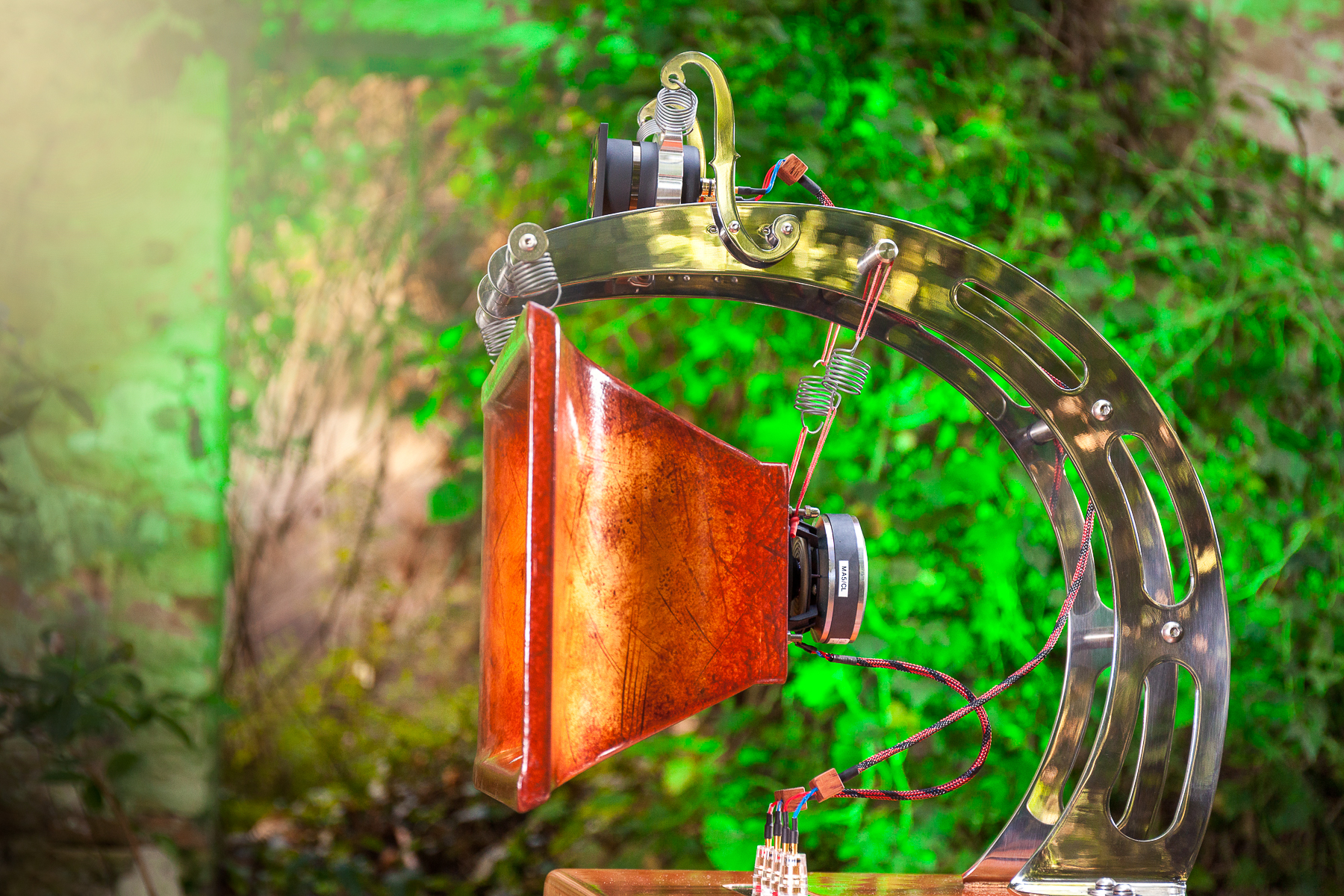
Calabi Yau wave guide
This philosophy is also embodied in the proprietary loading system used in many of my designs: T.D.R. – Tuning Distributed Reflex. This adjustable, distributed reflex port configuration allows the user to fine-tune the loudspeaker's low-frequency response to the room acoustics and personal listening preferences. The implementation of resistive damping combined with large vent areas delivers a more articulated, harmonically rich bass response that integrates effortlessly into the listening environment.

Calabi Yau sn3 with TDR box tuning device
Speaker customization follows this very same principle, optimizing components for true high efficiency: ultralight moving assemblies, compliance-tailored suspensions, high-grade paper cones, and sophisticated magnetic circuits—extending to the use of field-coil magnets when costs and physical dimensions do not present design constraints. Since 2023, Clinamen has also embarked on developing its own in-house driver production line, which I hope will soon see its first commercial implementation in the Mare Diamante loudspeaker (a 3-way system featuring a waveguide-loaded midrange).
Clinamen is intentionally built outside the bounds of industrial mass production. Low output power, large acoustic enclosures, radical engineering solutions: choices driven not by mass-market appeal, but by the pursuit of raw musical intensity.
In the Clinamen methodology, listening fulfillment is not regarded as a purely acoustic phenomenon, but as a complete sensory experience. Visual aesthetics play an integral role in entering a dialogue with the work: proportions, materials, craftsmanship, and finishes all combine to prepare the listener for a deeper connection with the musical event about to unfold. Aesthetics are therefore not born as a superficial design exercise, but as a natural extension of function—every visual choice aligns seamlessly with purpose, mechanical and electrical architecture, and construction logic. The result is an object where beauty and utility stem from the exact same design root, embodying an integrated vision where form and performance evolve as one.

KATLA MC Step-Up: standard-setting quality and refined elegance for the ultimate listening fulfillment.
Another fundamental pillar of the Clinamen philosophy is educational outreach: through the website articles and open sessions at the Atelier, engineering principles, empirical results, and design philosophies are freely shared. This is not intended as a demonstration of superiority, but as an active effort to cultivate a more conscious, discerning listening culture.
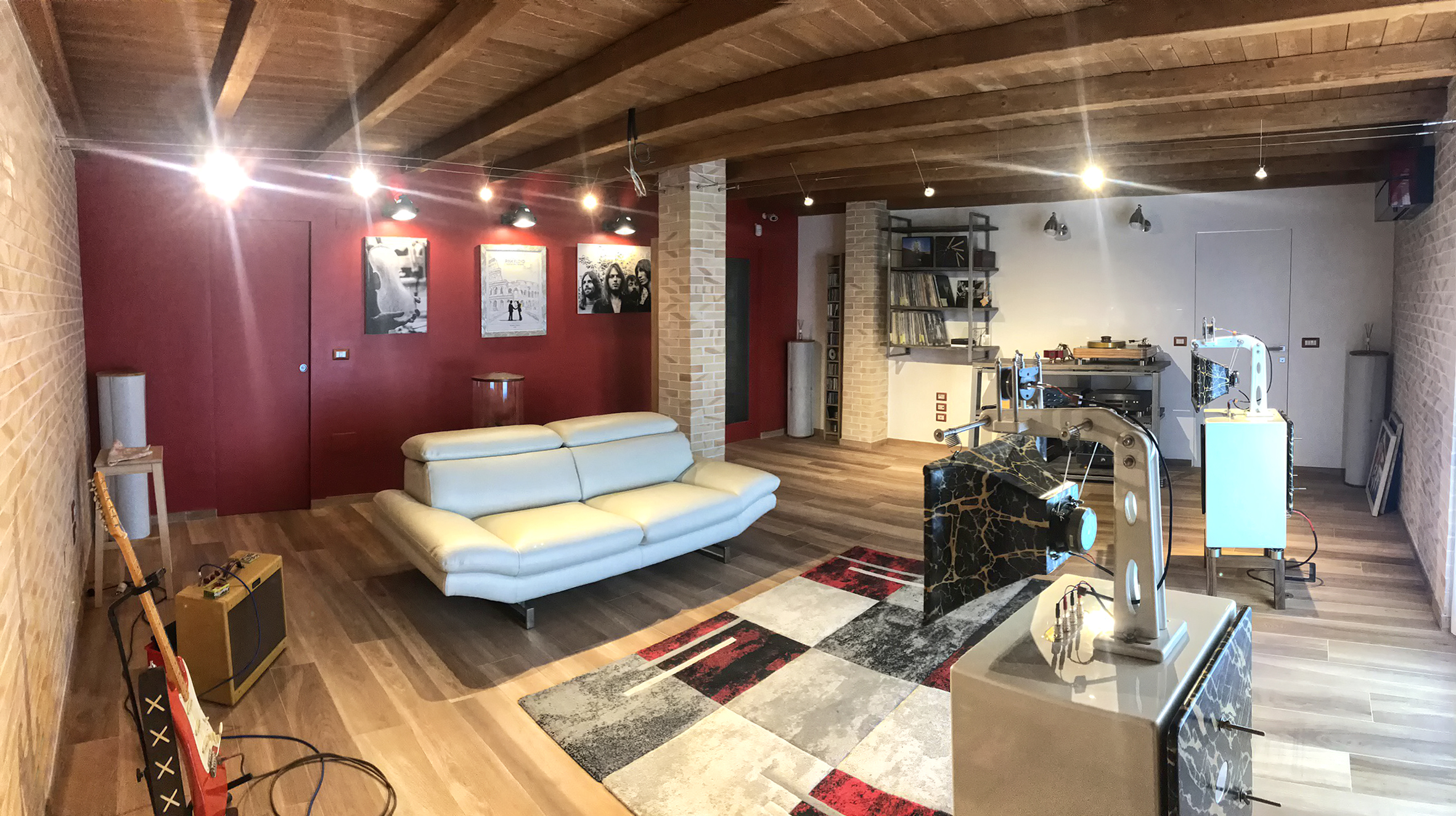
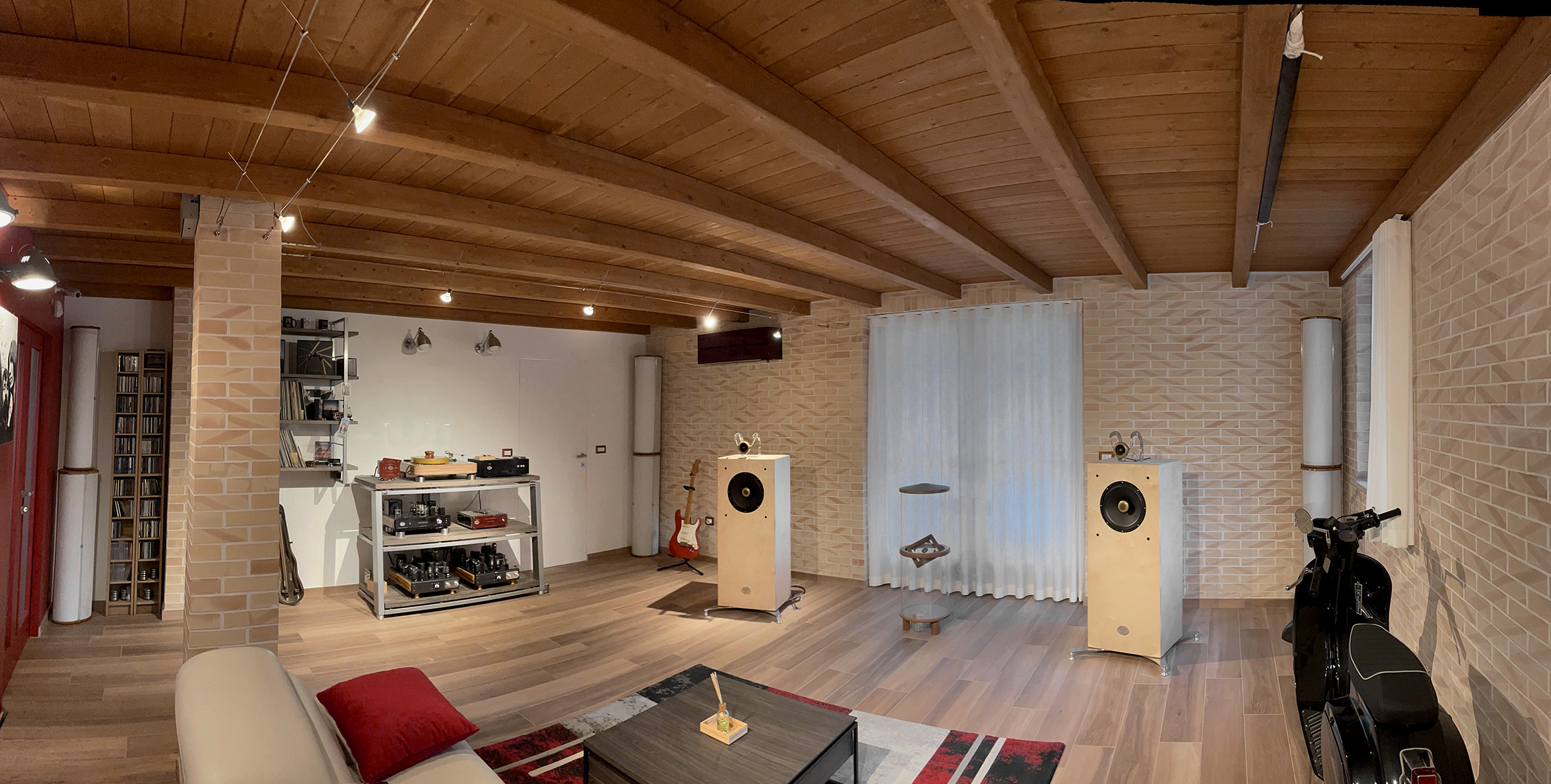
Atelier Clinamen, a place for inspiring listening sessions and engaging discussions on audio and beyond.
Clinamenaudio • Dott. Ing. Stefano Buttafoco
Contrada Barattelli 3A
San Benedetto del Tronto (AP) 63074
C.F.: BTTSFN74M01H769L / P.IVA: 02123590446
Registro AEE : IT20070000012328
Update cookie preferences
Tel. cellulare (+39) 340 8756612
Tel. laboratorio (+39) 0735 782043
E-mail: info@clinamenaudio.com
Instagram  :https://instagram.com/clinamenaudio