
- Home
- Why Clinamen
- Philosophy
- White paper
- The divider effect and SUT gain
- Total damping calibration to maximize tracking performance in MC cartridges
- Thinking beyond 47k: SUT primary loading and its effects on damping
- Clinamen Step-Up Transformer Theory
- IMA Amplifiers and Volume Control: Evolution of Audiophile Thought
- Philosophy of Physical Music Media
- Reviews
- Pricing Policy and Technical Support
- Contact

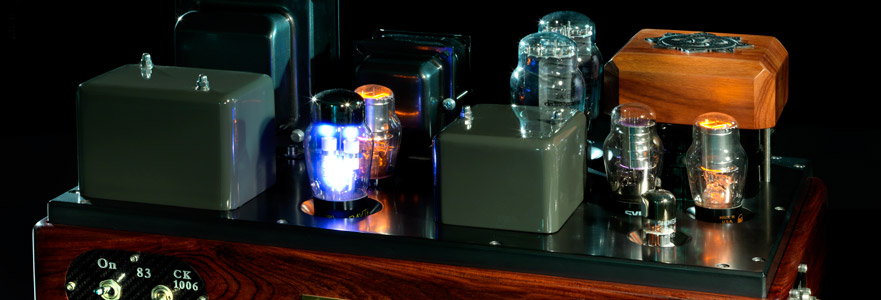
DDDAC 1794 NOS with output transformers
"Some projects are designed to chase measurements. Others are born to chase the music."
The DDDAC 1794 NOS, designed in the Netherlands by Doede Douma, belongs to the second category. The Dutch company Audio Creative distributes a kit for this DAC, which can be implemented across various quality levels. In the following article, I will tell you about the DDDAC (an acronym for Doede Douma DAC) and how I assembled it to maximize its performance, housing it in a chassis crafted with the utmost care regarding both ergonomics and input/output connections.

This converter is based on the famous DDDAC platform built around the Texas Instruments PCM1794 DAC chip, operating in pure NOS (Non-Oversampling) mode—without upsampling or traditional digital filtering.
A counter-current choice, born from the search for a more natural, continuous, and temporally coherent reproduction, far removed from the hyper-processed signature of most modern digital conversion.
The design philosophy is simple yet radical: minimize digital artifacts, eliminate redundant stages, and let the quality of the power supply, conversion, and analog output stage dictate the final result.
The DAC employs a modular "stackable" architecture—a hallmark feature of the DDDAC project. The DAC boards can be paralleled together to improve the signal-to-noise ratio, micro-dynamics, soundstage stability, and harmonic density.

Internal view featuring the 4 parallel-stacked boards and the "Magical" inductive PSU

Detail of the 4 DAC 1794 boards operating in parallel, with the output transformers shown in the background
This build features a quad-deck configuration with four paralleled boards, widely considered one of the most advanced and sought-after implementations of the project.
Power delivery is handled by the rare, potted Audio Creative Magic Power Supply (inductive type), developed specifically for the DDDAC through iterative research into the sonic behavior of choke-filtered linear power supplies. This solution stands in stark contrast to modern switching power supplies, engineered to achieve a more natural noise floor, superior dynamic stability, and a genuine reduction in high-frequency noise.
The output stage is entirely passive, relying on dedicated, ultra-high-quality output transformers that enable both single-ended and true balanced outputs (by "true," I mean without resorting to operational amplifier tricks). The total absence of op-amps in the signal path, combined with transformer-based conversion, maintains an exceptionally organic, tactile, and three-dimensional presentation.

The Gold Edition output transformers
The assembly was personally carried out by me using hand-selected components, including Amtrans resistors, fiberglass eyelet boards, and wiring optimized strictly for sonic performance.
The mechanical construction was likewise developed without compromise: the chassis, made from Anticorodal aluminum, brings the total weight of the unit to 9 kg and features a solid 10 mm front panel. Overall dimensions are 33 x 31 x 13 cm. Silicone isolation feet decouple the DDDAC from its supporting surface.
The side panels are made of real carbon fiber, while the front and rear panels are finished in automotive-grade "Rosso Magma" paint, a metallic shade inspired by molten lava reflections. The input and output connectors are top-of-the-line SHARK hardware.

Stainless steel backlit switches, laser engravings, top ventilation featuring a NACA duct, and real carbon fiber side panels contribute to an aesthetic that evokes the mechanical realm of motorsport, reinterpreted through a high-end audio lens.
The top panel integrates a multi-layered assembly consisting of a stainless steel mesh and a spaced translucent Rosso Magma panel, designed to reveal hints of the underlying structure while adding visual depth to the cabinet.

The striking NACA air intake duct, a deliberate homage to the world of motorsport.
The 1 kHz sine wave oscillogram at the DAC output clearly displays the characteristic stepped waveform: this highlights the pure NOS nature of the conversion, completely free of interpolation and digital reconstructive filtering.

The final result is not merely an assembled DAC, but a radical and personal interpretation of one of the most highly regarded NOS designs in the international audiophile scene. This converter was not created to impress with laboratory specs or numbers. It was built to restore presence, substance, micro-dynamics, and harmonic continuity in a way that analog enthusiasts immediately recognize.
Only one unique unit available for sale at the price of €4,700.
You can reserve a listening session for this extraordinary machine at the Clinamen Atelier.

Clinamenaudio • Dott. Ing. Stefano Buttafoco
Contrada Barattelli 3A
San Benedetto del Tronto (AP) 63074
C.F.: BTTSFN74M01H769L / P.IVA: 02123590446
Registro AEE : IT20070000012328
Update cookie preferences
Tel. cellulare (+39) 340 8756612
Tel. laboratorio (+39) 0735 782043
E-mail: info@clinamenaudio.com
Instagram  :https://instagram.com/clinamenaudio