
- Home
- Why Clinamen
- Philosophy
- White paper
- The divider effect and SUT gain
- Total damping calibration to maximize tracking performance in MC cartridges
- Thinking beyond 47k: SUT primary loading and its effects on damping
- Clinamen Step-Up Transformer Theory
- IMA Amplifiers and Volume Control: Evolution of Audiophile Thought
- Philosophy of Physical Music Media
- Reviews
- Pricing Policy and Technical Support
- Contact

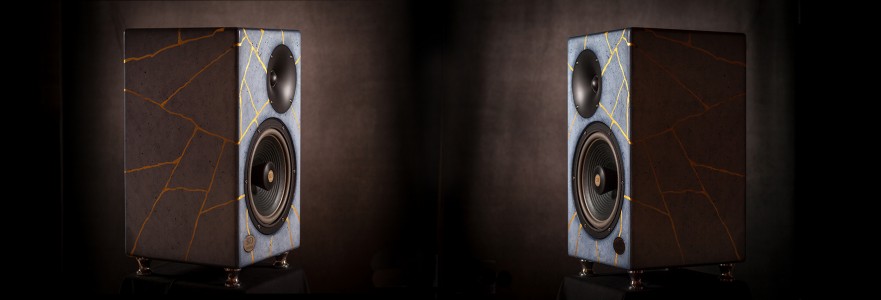
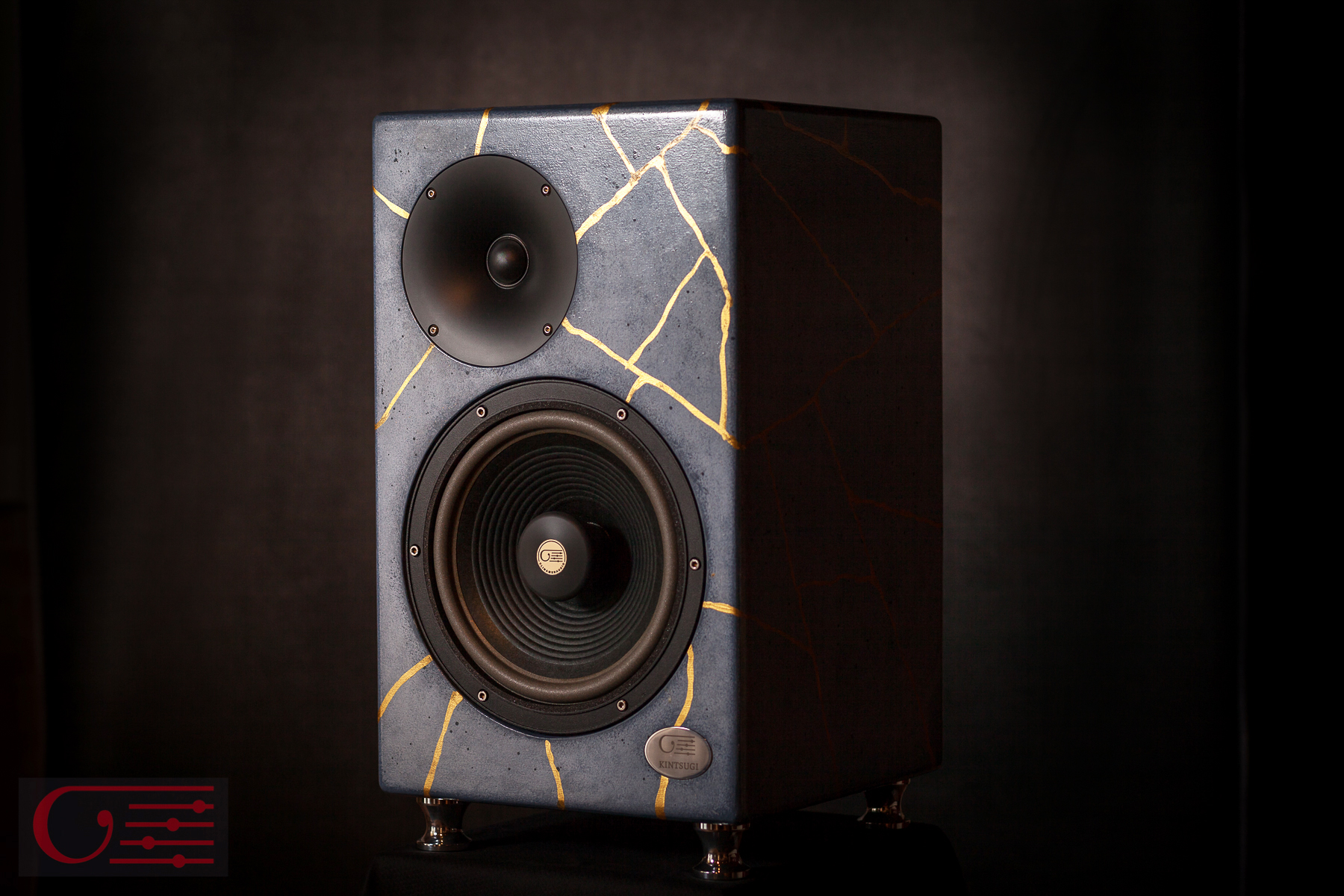
"Kintsugi" 2 way 10" acoustic suspension
Project completed in November 2024. One unit in stock
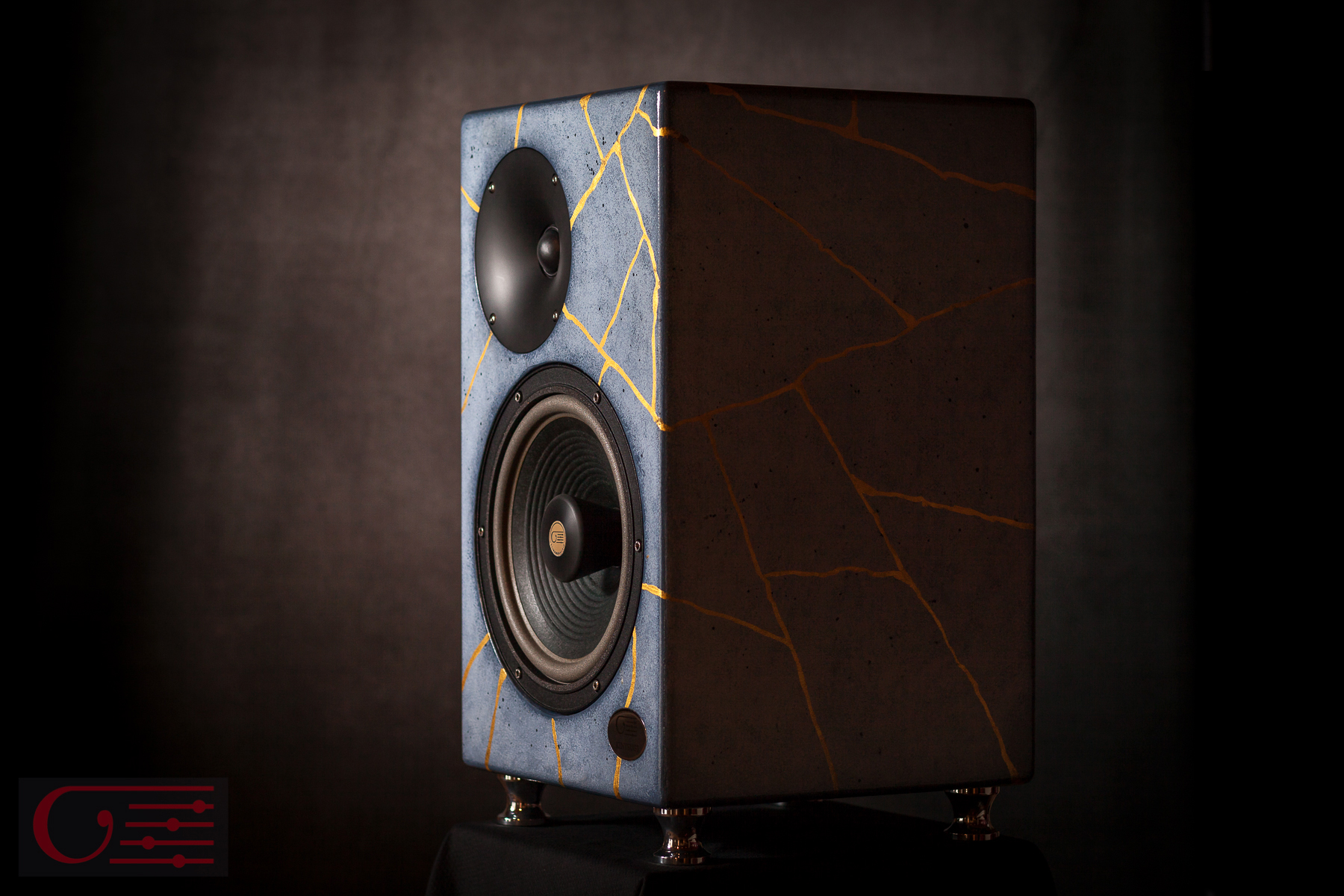
Genesis and Inspiration: "The Acoustic Suspension Problem"
The "Kintsugi" Project was a self-imposed challenge I decided to take on. In 2023, I carried out major upgrade work on a customer's ADVENT loudspeakers, which are notoriously tuned in an acoustic suspension configuration. After a total redesign of the crossover with higher quality components, revising the drivers, damping the baskets, using natural wool as sound-absorbing material, and installing high-quality wiring, I was favorably impressed by their sound reproduction.
This inspired the idea of drawing from the ADVENT speaker concept to create an acoustic suspension system with a 10" woofer. However, my design had to be different from all other acoustic suspension projects: it had to solve the issue of electroacoustic sensitivity. I was unwilling to settle for anything below 93 dB/W/m—a huge challenge considering that a woofer needs a very small magnet to maintain a high Qts value in order to work well in an acoustic suspension enclosure.
It was a tough challenge, but I am thrilled with the result. Here is the brief story behind it—without taking up too much of your time—and I invite you to my Atelier to listen to the Kintsugi.
The Name
I drew inspiration from the ancient and noble Japanese art of repairing broken porcelain and ceramics. The technique involves joining the shattered pieces back together with Urushi lacquer, which then serves as a substrate for gold powder applied to cover the "scars." The essence of Kintsugi lies in restoring an object that would normally be discarded or forgotten, making it truly unique and one-of-a-kind, as no two fracture patterns are ever identical. It is about enhancing value rather than throwing things away.
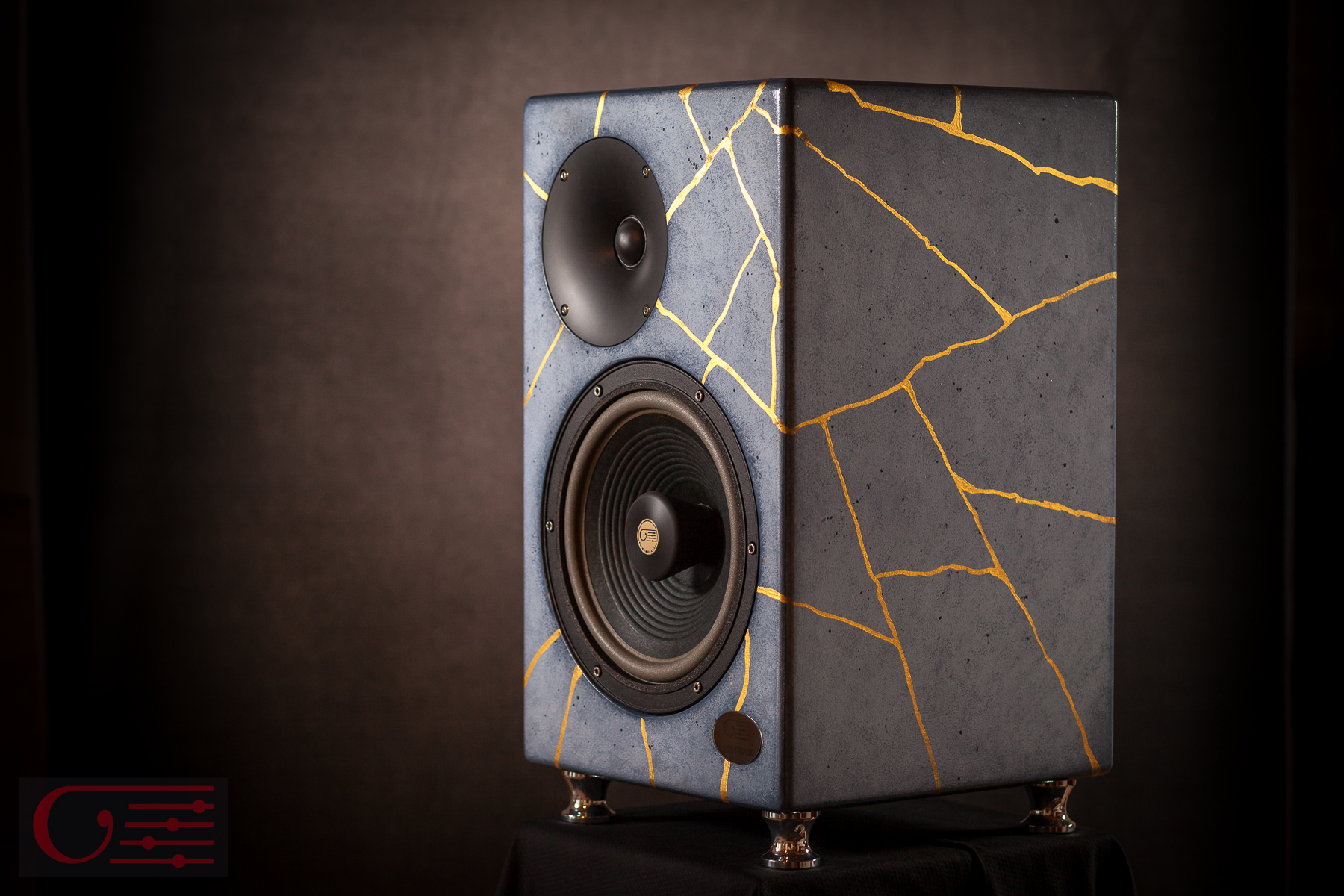
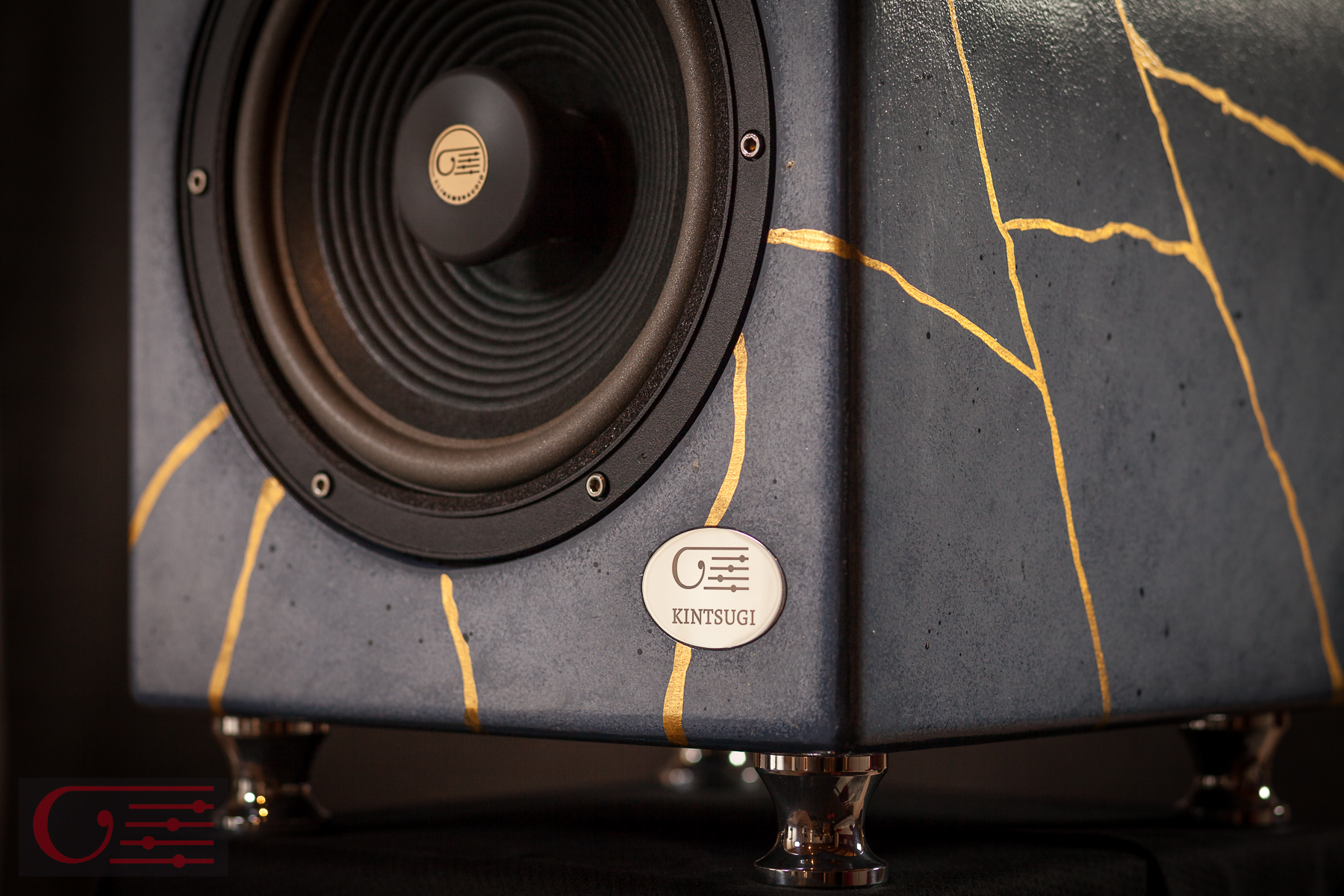
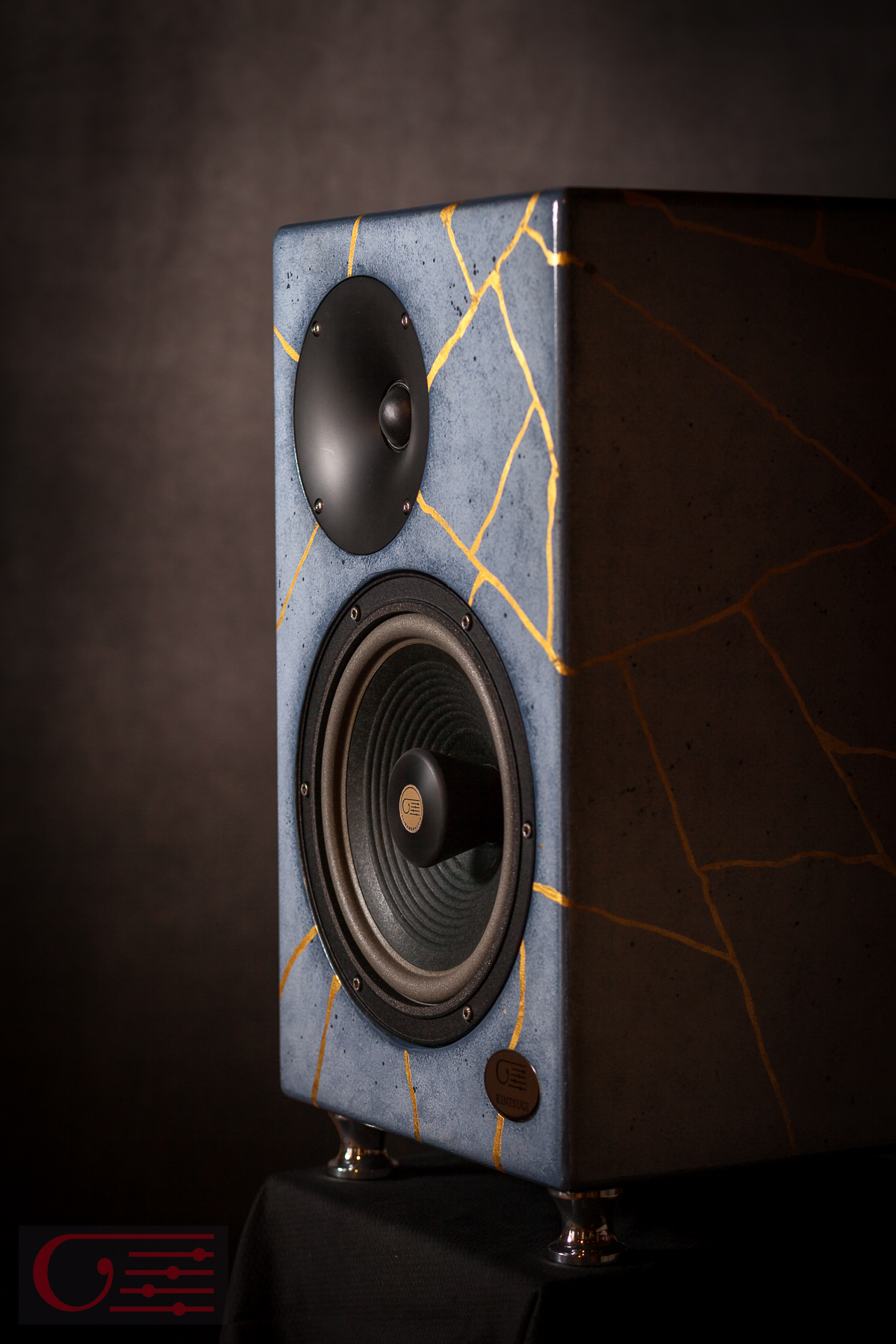
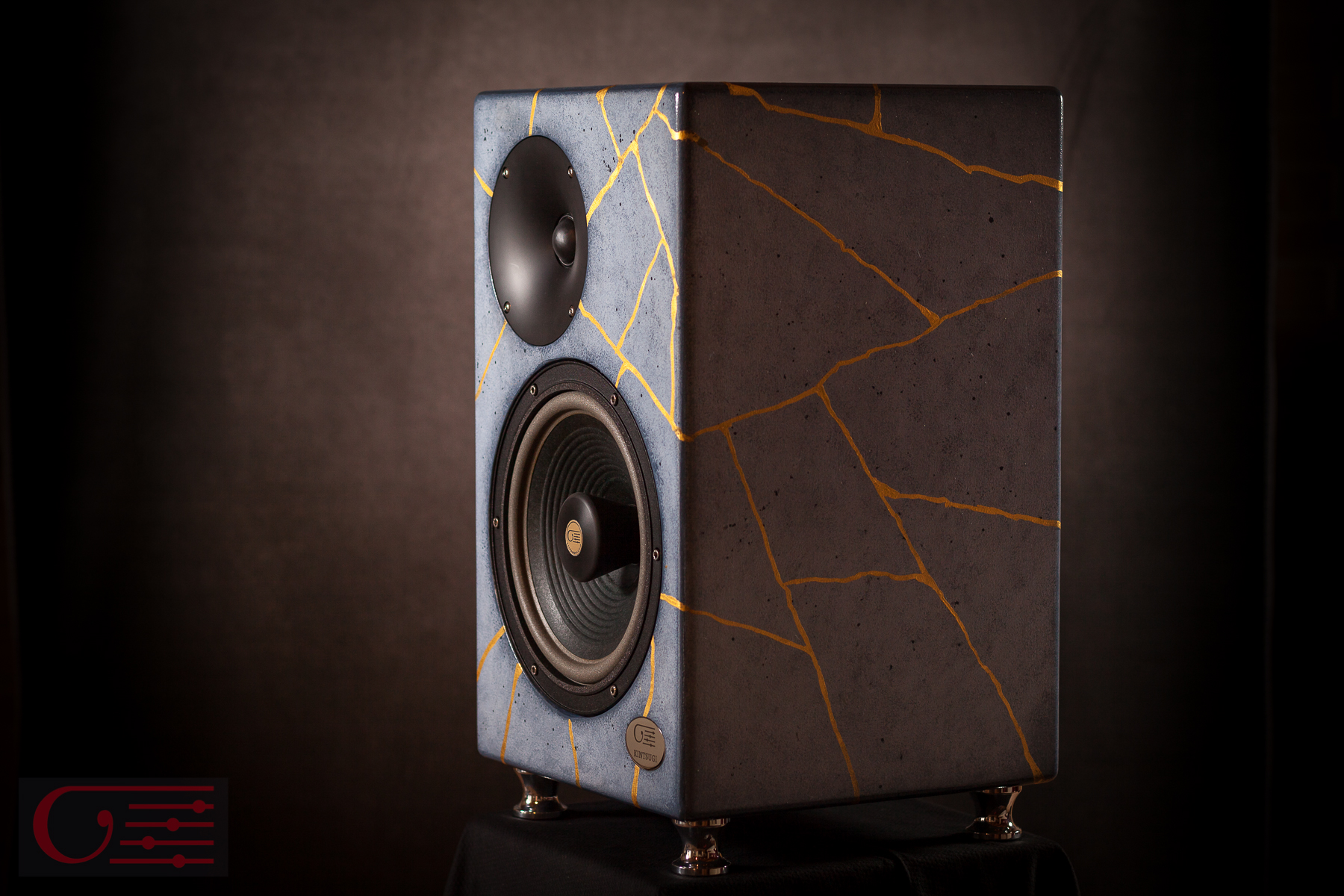
This noble concept inspired both the name of the speaker and its artistic color palette. I instructed my restorer to apply the Kintsugi technique to the pair of 24 mm birch plywood cabinets provided. Together, we selected a color reminiscent of fine light-blue porcelain. Finally, the fracture lines were painted using real gold leaf. Consequently, this pair of speakers stands as a small, unique, and unrepeatable work of art, fully honoring the philosophy of Kintsugi.
The Technology of Acoustic Suspension
Let us talk in clear yet sophisticated terms about the acoustics and technology behind the acoustic suspension—or sealed box—alignment.
In a generic loudspeaker, the lower frequency limit is determined by acoustic cancellation (or short-circuiting) between the front and rear radiation of the driver diaphragm, which are 180° out of phase and cancel each other out when they meet. The primary purpose of speaker enclosures is precisely to eliminate this acoustic short-circuit or push it as low down the frequency spectrum as possible. Various enclosure designs achieve this: dipoles, infinite baffles, bass-reflex systems (which operate differently by recycling part of the woofer’s rear emission to extend low-frequency bandwidth), and our featured acoustic suspension.
In an acoustic suspension design, the enclosure is completely sealed, thus eliminating acoustic short-circuiting. The rear sound wave is absorbed by internal damping material, which, in the case of acoustic suspension, completely fills the enclosure's interior volume.
Woofers suited for this type of loading must feature high suspension compliance (low stiffness). This is because the fixed, trapped volume of air inside the cabinet acts as an air spring in parallel with the driver's mechanical suspension, stiffening the overall system suspension (woofer + box). Consequently, the air trapped inside the box dampens and restricts the woofer's excursion.
To achieve proper alignment, the driver's total Q-factor ($Q_{ts}$) must be relatively high compared to its free-air resonance frequency ($F_s$). High $Q_{ts}$ values are obtained using smaller magnetic motor assemblies, which result in lower magnetic flux density in the gap—and ultimately, lower electroacoustic sensitivity for the woofer.
In summary, a traditional acoustic suspension loudspeaker can never achieve high efficiency. This limitation historically kept me away from this type of alignment, as high transduction efficiency is an indispensable parameter for superior sound reproduction in my book.
The Solution --> "Kintsugi": a medium/high efficiency sealed-box loudspeaker
With the Kintsugi project, I believe I have created the first medium/high efficiency acoustic suspension loudspeaker. The compromise I accepted was a slightly more restrained low-frequency extension, but I believe I have struck a remarkable balance between dynamic contrast, bandwidth, and emotional involvement. I invite you to come listen and judge for yourself.
The Kintsugi speakers are designed to pair seamlessly with zero-feedback tube amplifiers. In fact, the non-negligible output impedance of this type of electronics—the only ones I truly prefer and love—allows the system to achieve the exact alignment for which the Kintsugi was engineered.
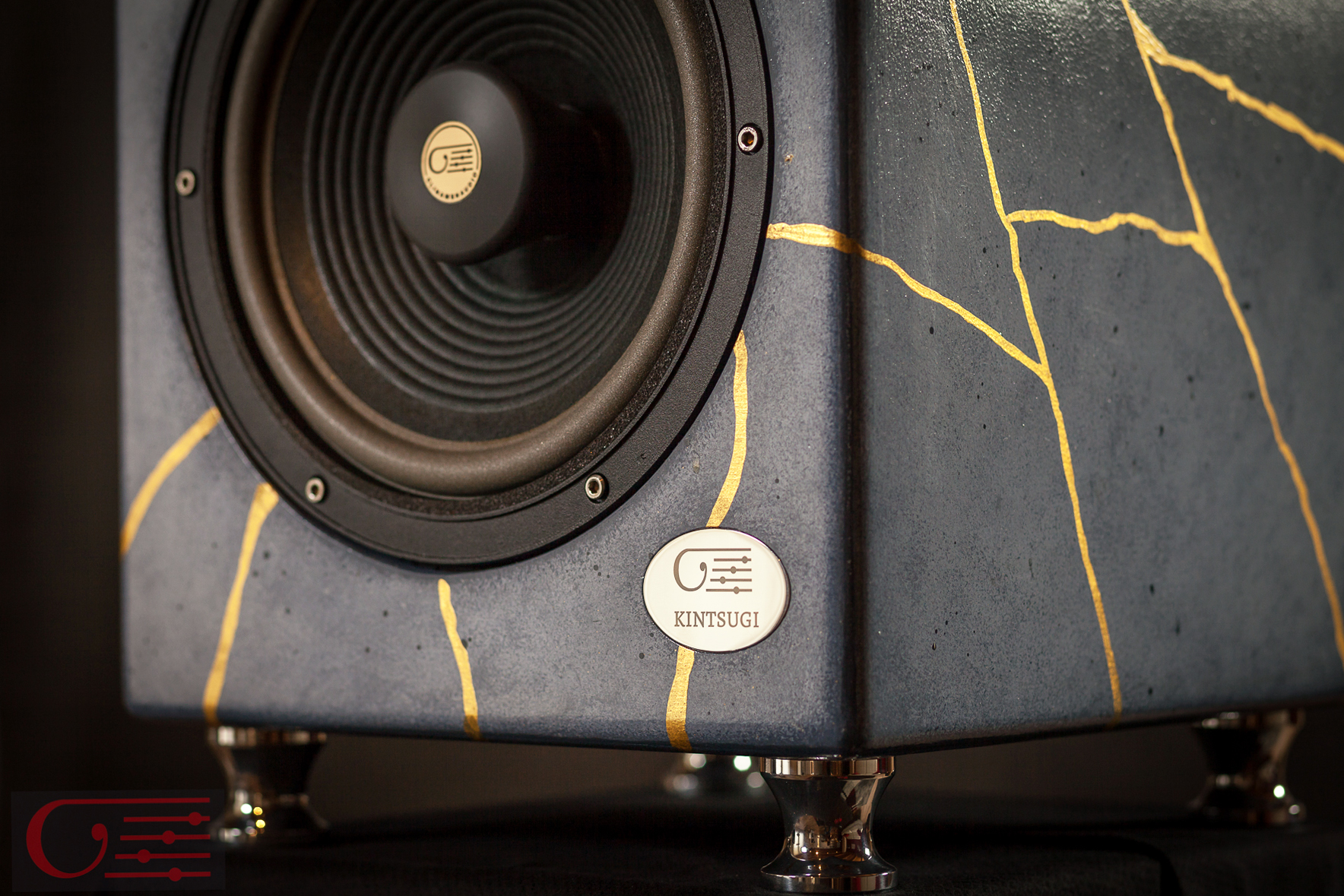
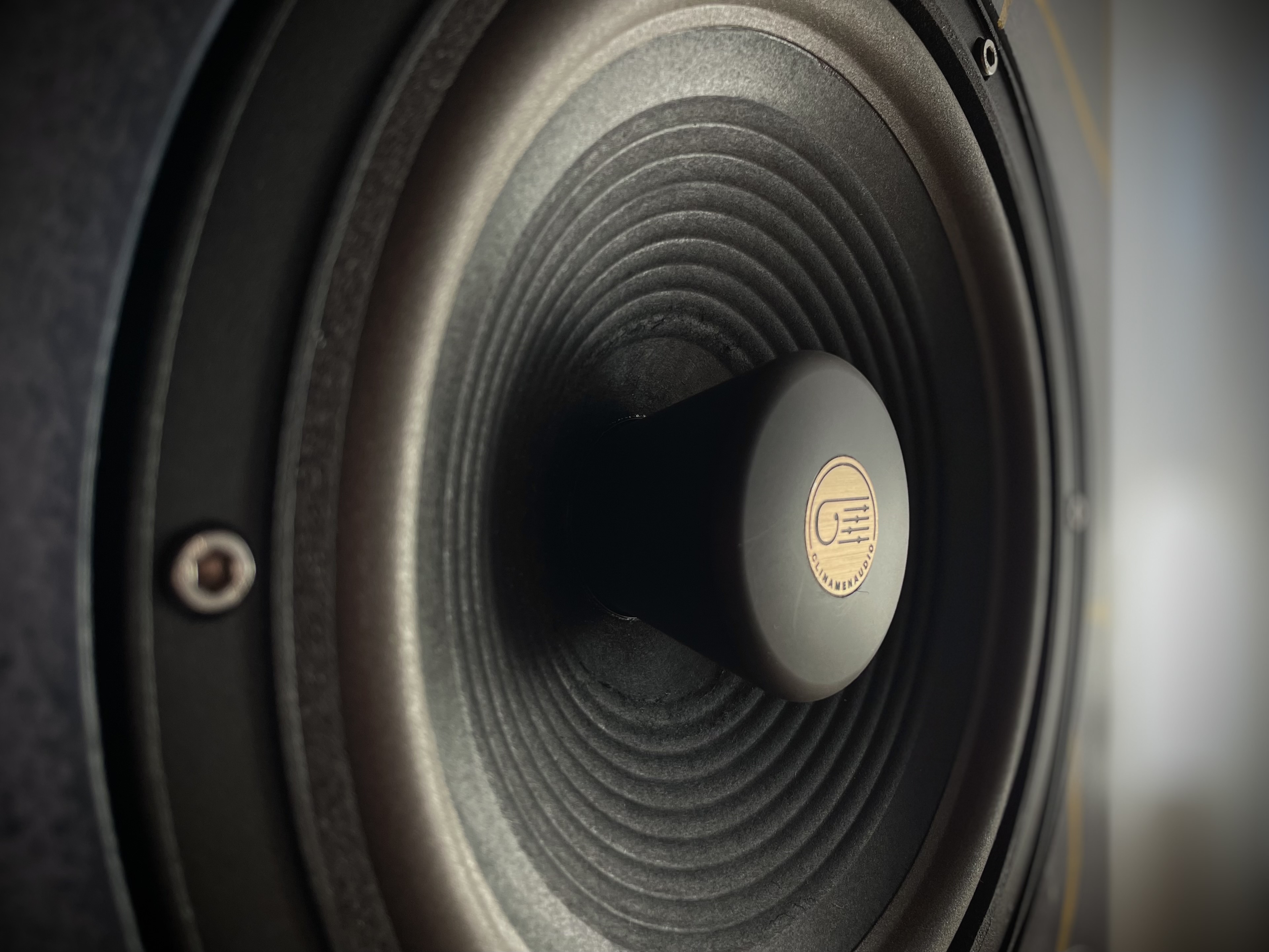
The woofer is a 10" driver manufactured by Audax, which I heavily modified to suit my project requirements. I removed the dust cap and threaded the central pole piece to install a massive, custom-lathed Delrin phase plug, optimizing the crossover transition to the tweeter. Additionally, the cone diaphragm features three distinct dampening coatings—two applied to the outer surface and one to the inner surface.
The Tweeter
The tweeter is the crown jewel of the Kintsugi: a refined Seas Excel featuring a generous 1.5" soft dome, a neodymium magnet motor, and a rear chamber designed to lower its resonance frequency ($F_s$), making it usable down to very low crossover points.
Furthermore, I heavily modify the unit by removing the original front flange and installing a custom-designed Delrin waveguide in its place. This optimizes directivity control and improves phase coherence at the acoustic crossover point with the woofer.
This overall design allows for a remarkably low transition frequency between the drivers, around 1,500 Hz. Higher crossover points would have introduced off-axis response issues given the diameter of the woofer, resulting in an unnatural sound presentation. Therefore, opting for an oversized 1.5" (38 mm) soft-dome tweeter equipped with a rear chamber provides the perfect match for the crossover frequency required by a 10" woofer.
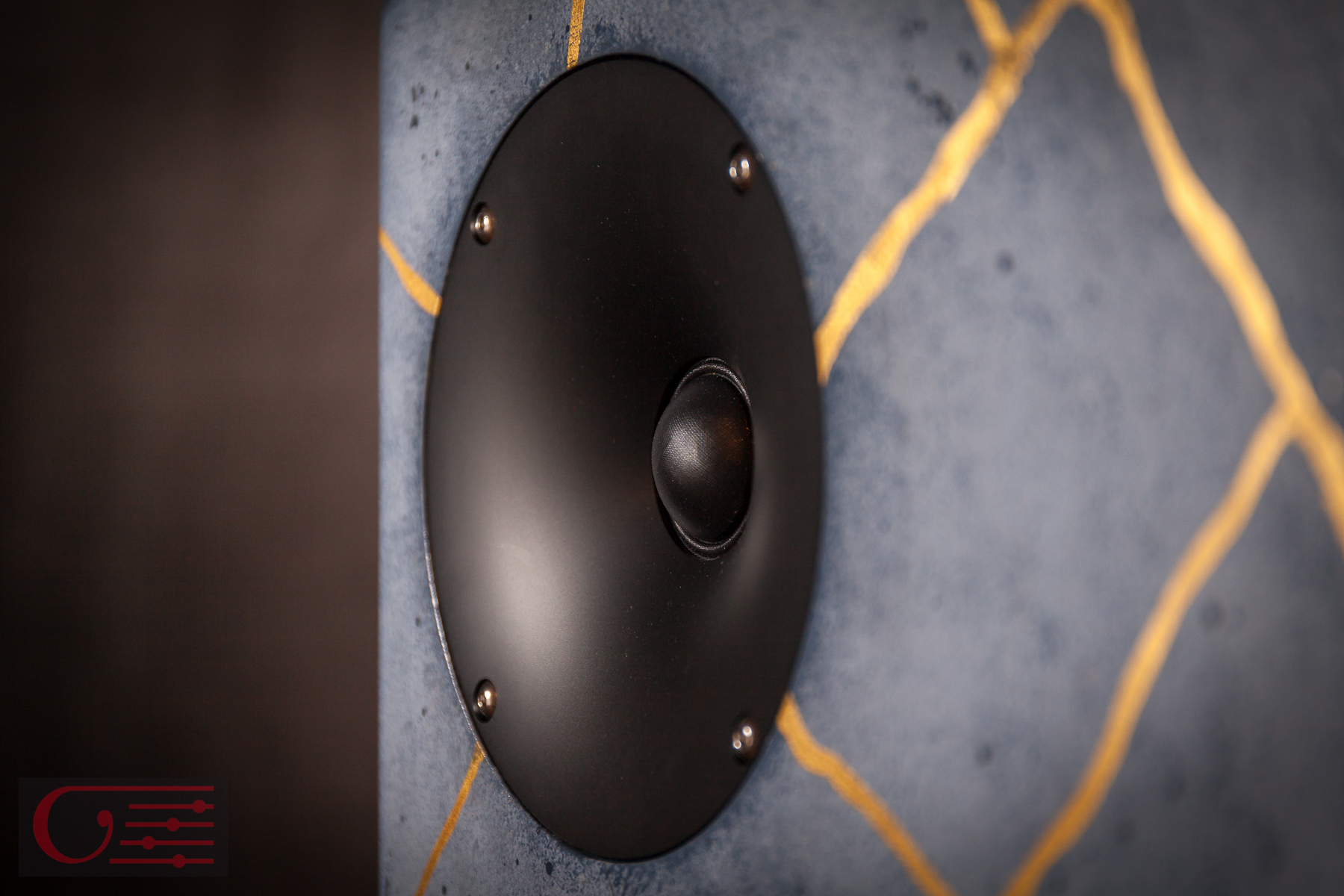
The tweeter is mounted offset from the cabinet's vertical centerline. This asymmetric placement serves a dual purpose: it prevents diffraction artifacts from accumulating along the baffle edges, and it offers two distinct setup options within the room—with the tweeters oriented either inward or outward. The soundstage and imaging will shift noticeably between the two configurations, allowing you to choose the optimal placement based on your personal listening preferences and room acoustics.
As mentioned earlier, the enclosure is completely filled with acoustic damping material. For this project, I used pure virgin wool, precisely 1.2 kg for each cabinet.
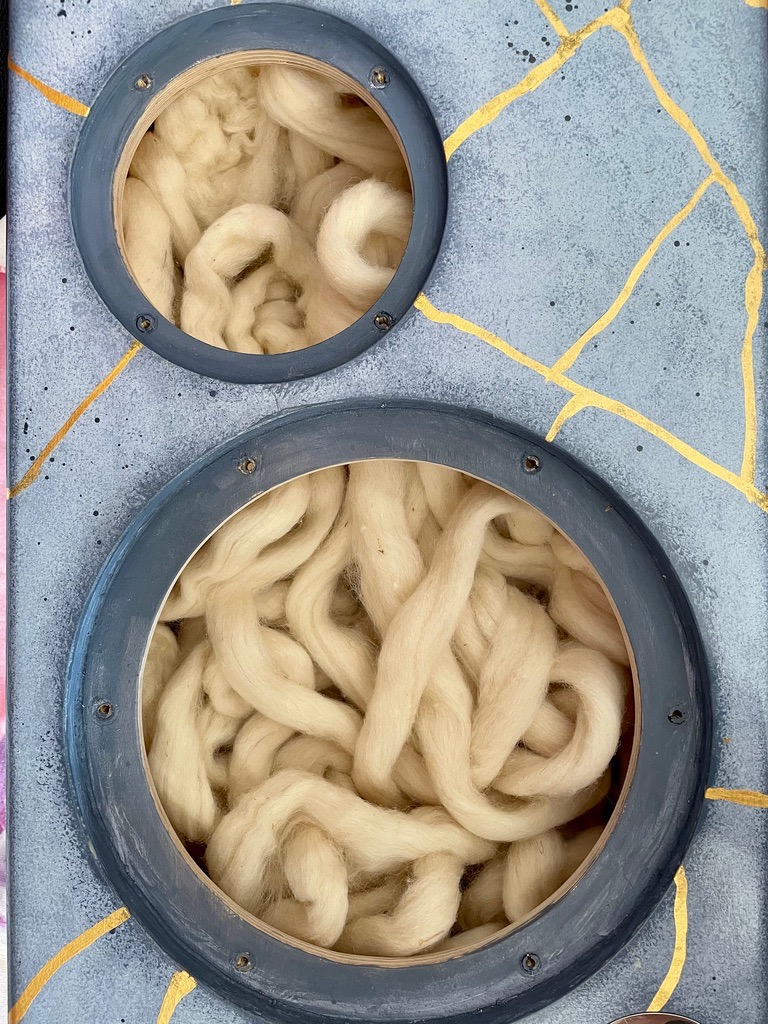
The front baffle dimensions of the Kintsugi adhere to the Golden Ratio, serving both sound fidelity and aesthetic elegance. The enclosure features an internal volume of 45 liters.
Dimensions & Hardware Specifications
External Dimensions:
-
Width: 340 mm
-
Height: 545 mm (+ 45 mm for the Ergal feet)
-
Depth: 350 mm
I recommend pairing the Kintsugi with stands between 35 and 40 cm in height.
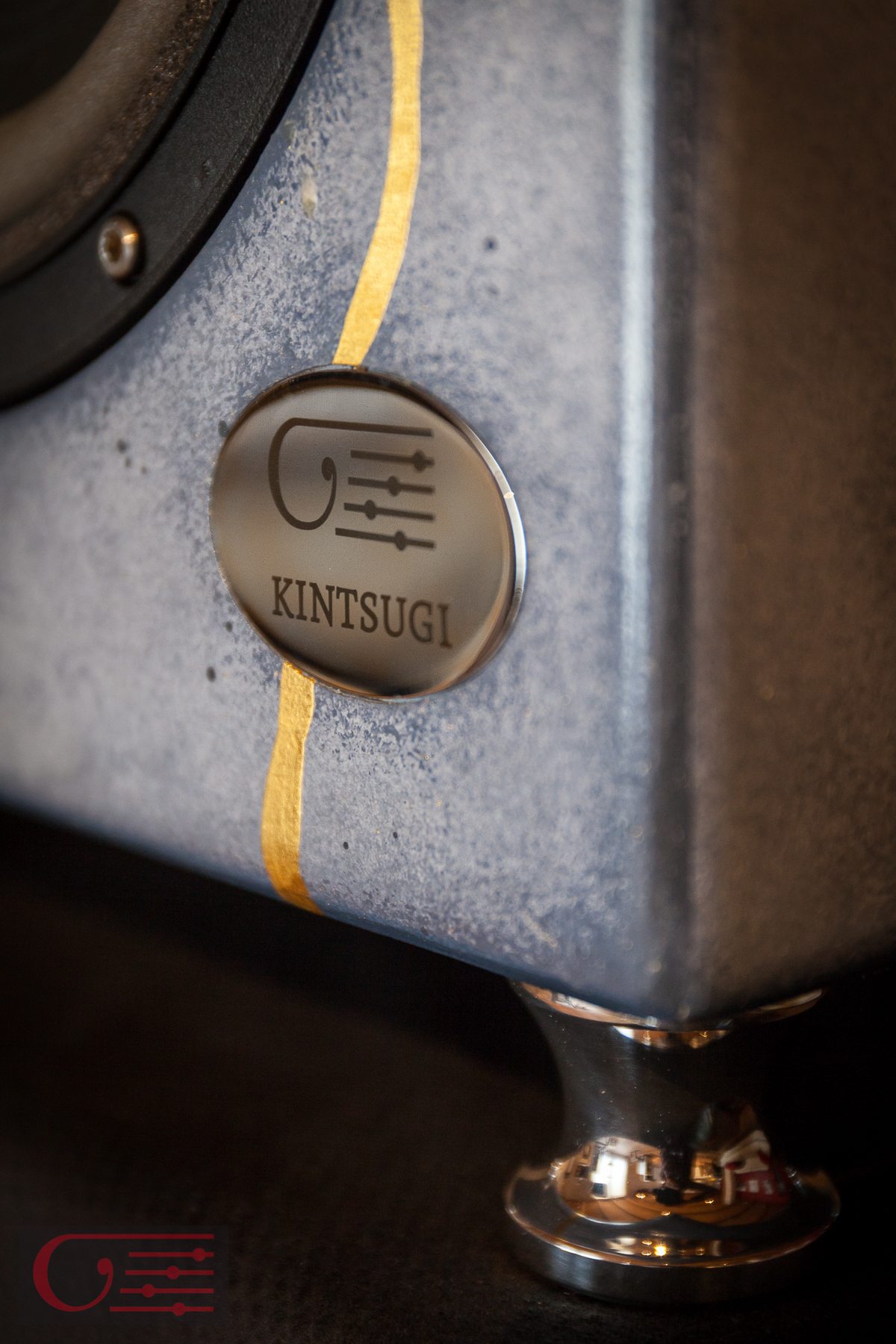
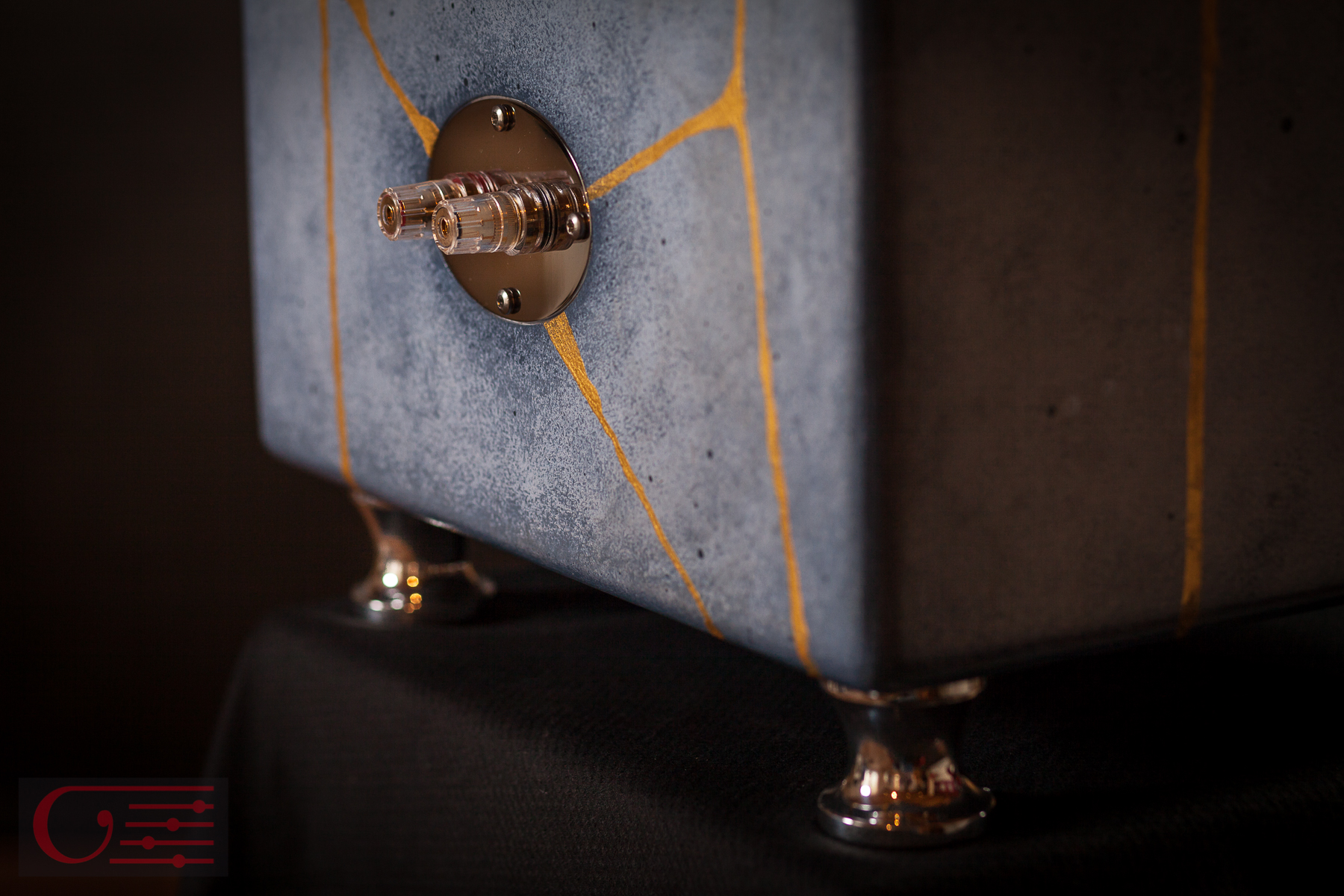
The feet are crafted from mirror-polished Ergal (7075 aluminum alloy), measuring 45 mm in both height and diameter. The rear binding post plate is made of mirror-polished AISI 304 stainless steel, matched by the front emblem plate bearing the Kintsugi name, which features a subtle, highly refined laser etching.
Crossover
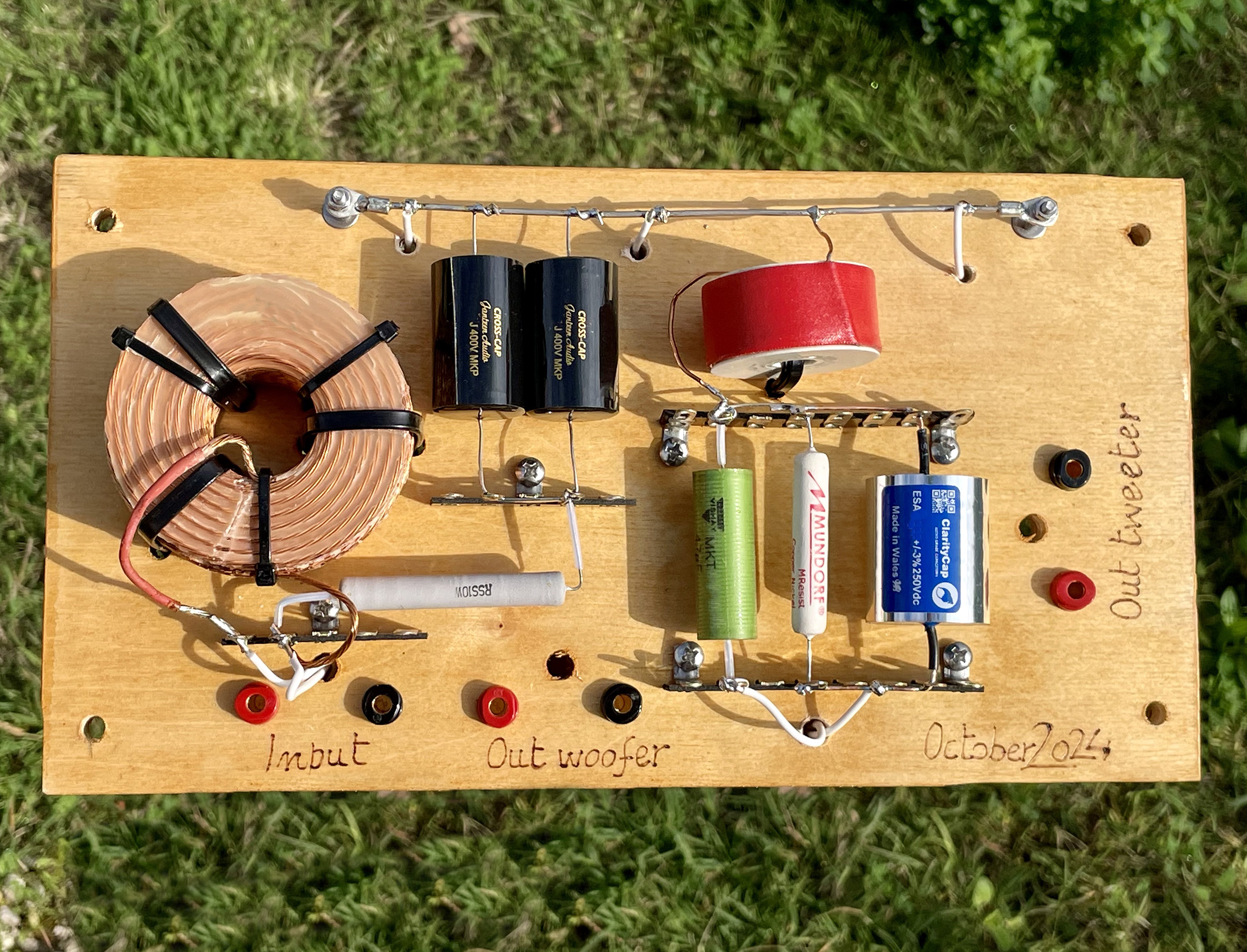
The crossover components are of exceptionally high quality: a Seven-Strand Litz (Heptalitz) air-core inductor for the woofer, and polypropylene capacitors throughout the rest of the circuit. Internal wiring utilizes silver-plated copper with PTFE (Teflon) insulation, soldered with Cardas eutectic solder.
The crossover assembly is mounted on a 12 mm birch plywood board, which screws into two structural wooden crossbeams integrated into the cabinet interior. Furthermore, all connections leading from the crossover to the drive units and input binding posts connect via a 4 mm male/female banana plug system. This modular design makes the crossover easily removable for inspections or routine checks.
Price
The Kintsugi loudspeakers are a truly unique creation, both in their design philosophy and the refined craftsmanship of their execution.
They are currently offered at a price of €7,200 per pair.
Clinamenaudio • Dott. Ing. Stefano Buttafoco
Contrada Barattelli 3A
San Benedetto del Tronto (AP) 63074
C.F.: BTTSFN74M01H769L / P.IVA: 02123590446
Registro AEE : IT20070000012328
Update cookie preferences
Tel. cellulare (+39) 340 8756612
Tel. laboratorio (+39) 0735 782043
E-mail: info@clinamenaudio.com
Instagram  :https://instagram.com/clinamenaudio